
Duet Cats: Music & Meow Game
AMANOTES PTE. LTD.Casual
4.46.14K Reviews
- Version
- 2.0.22
- Installs
- 50.00M
- Age Rating
- Everyone
Screenshots
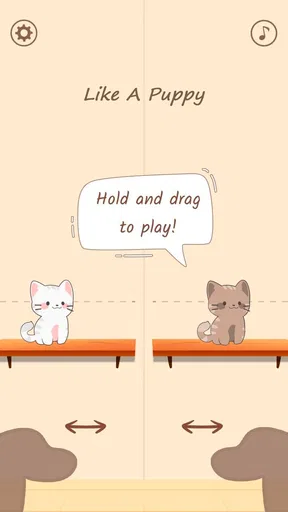
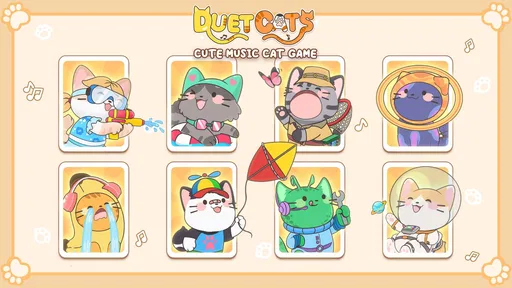
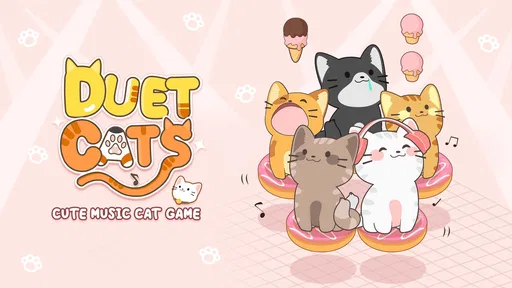
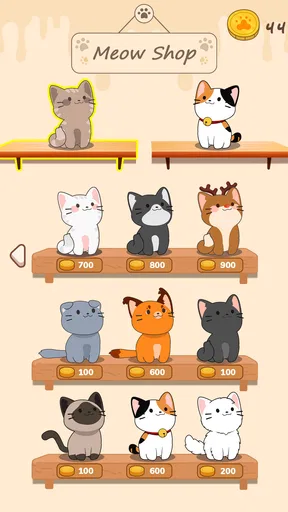
Our Review of Duet Cats: Music & Meow Game
 Analysis by Appyee
I spent time with Duet Cats: Music & Meow Game to see whether its central idea—turning cute cat performances into a rhythm game—has enough depth to stay enjoyable beyond the first few minutes. My answer is yes, with an important qualification: this is best understood as a light, playful timing game rather than a serious music-training tool. Its appeal comes from the way tapping, feeding, and animated cats work together to make simple interactions feel cheerful.
The game is free to start, belongs to the casual category, and is made by AMANOTES PTE. LTD. It is suitable for Everyone, which matches the gentle presentation and approachable controls. The current version is 2.0.22, and it runs on Android 7.0 or later. Those details matter mainly because the game is designed to be easy to pick up on a wide range of devices, without asking the player to learn a complicated control scheme before enjoying the main idea.
Why the cat rhythm concept works
The standout capability is the way the game places cats at the center of a musical tapping routine. Instead of presenting a conventional instrument interface, it gives the rhythm a character-driven form: the cats sing or meow, and the player taps in time while also using food as part of the playful interaction. That framing makes each short session feel more like entertaining a group of pets than practicing a difficult song.
In my experience, the visual theme changes how mistakes feel. Missing a beat in a traditional rhythm game can feel like failing a test, especially when the screen is crowded with notes or the track becomes demanding. Here, the cats soften that pressure. The presentation encourages me to try again because the immediate reward is not only better timing but also another amusing reaction from the animals.
The real strength is the low-pressure feedback loop: listen, tap, watch the cats respond, and repeat. That loop is more important than any individual song or screen because it makes the game suitable for small breaks. I can play while waiting for an appointment or when I want something more interactive than scrolling, without committing to a long session or building a complicated strategy.
That simplicity is also the main boundary. Players looking for a deep rhythm system, competitive ranking, detailed song editing, or demanding musical progression may find the experience too light. The game’s purpose is immediate charm and accessible timing, not the technical precision associated with more specialized rhythm titles.
How tapping and feeding feel during play
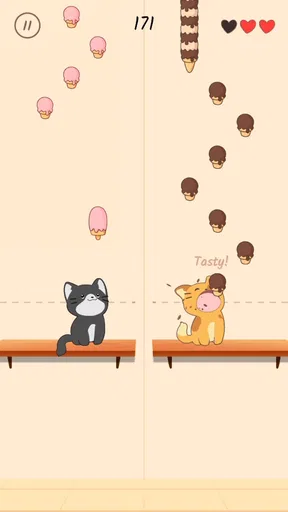
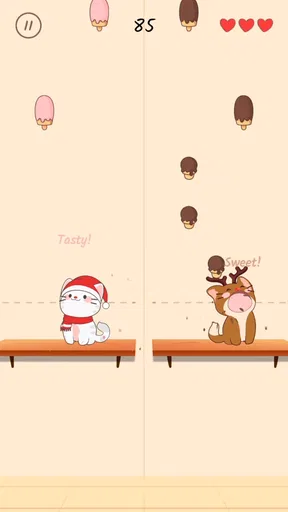
The basic interaction is easy to understand: the music provides the timing cue, and taps keep the performance moving. Feeding gives the cats an additional reason to stay engaged with the player’s actions. I found that this combination helps the game avoid feeling like a bare sequence of button presses. There is a small emotional reward attached to successful interaction, even when the underlying timing task is straightforward.
A useful way to play is to listen before trying to optimize every tap. On the first attempt at a track, I focus on the repeating beat and let the animation guide my attention. Once the rhythm becomes familiar, I can concentrate more on consistency. This approach works better than staring only at the screen, because the game’s musical identity is carried by the cats’ sounds as much as by the visual prompts.
The cat presentation also makes the game approachable for someone who normally avoids rhythm games. A friend who might reject a serious music title because it looks stressful can understand this one almost immediately: follow the beat, tap along, and enjoy the performance. That clarity is valuable on a phone, where a game often has to explain itself within moments.
At the same time, the cute theme should not be mistaken for unlimited variety. The novelty of the cats is strongest at the beginning, while long-term interest depends on whether the player enjoys repeating musical interactions and gradually improving timing. I would not recommend installing it solely for a one-time novelty if you usually stop playing casual games after discovering the central mechanic.
A practical routine for short sessions
My preferred routine is to play a few tracks with the sound turned on, then stop before the experience becomes repetitive. The audio is important here; playing silently removes much of the feedback that tells me when to tap. If I need a quiet distraction, I would choose a visual puzzle instead. This is one of the clearest trade-offs in the design: the game is more expressive with sound, but it is less flexible in situations where audio is inconvenient.
I also recommend using the first run through a song as a listening exercise rather than chasing a perfect result. That makes the second attempt more satisfying and reduces the temptation to tap too quickly. Because the game is casual, a relaxed rhythm usually serves the experience better than treating every sequence as a high-stakes challenge.
For children, the Everyone rating and friendly animals make the concept easy to share, but I would still treat it as a game with optional purchases rather than assuming every part of the experience is entirely free. The listed in-app purchase range begins at ten cents and reaches forty-nine dollars and ninety-nine cents per item. I would check the purchase flow carefully before handing the device to a child, especially if the phone or tablet uses a shared payment setup.
The everyday situation where it makes the most sense
The best scenario is a short, casual break when I want something cheerful but do not want to learn a new system. Imagine waiting for a takeaway order or sitting on public transport: I can open the game, play a few rhythm sections, and close it without losing an hour to a sprawling campaign. The cats provide enough personality to make the session feel like an activity rather than a timer-based distraction.
It can also work as a gentle introduction to rhythm games. Someone unfamiliar with the genre can learn the basic relationship between sound, timing, and touch without facing an intimidating interface. After that, the player can decide whether they want something more demanding. In this sense, Duet Cats is a friendly first step, not necessarily the final destination for a rhythm enthusiast.
Another useful situation is shared play between an adult and a child. One person can demonstrate the beat while the other watches the cats react, then switch roles. The game’s appeal is visual as well as mechanical, so it can create a small moment of conversation even when the player is not chasing a score. I would keep those sessions brief, since repetition can reduce the novelty for someone who is not already interested in cats or music.
It is less suitable for a commute where sound must remain off, a serious practice routine, or a player who wants a strong sense of progression. It is also not my first choice when I want a competitive challenge. A dedicated rhythm game is usually better for players who care about demanding patterns, measurable mastery, or a more intense performance loop.
How it compares with familiar casual alternatives
Compared with a standard puzzle game, this one depends more on timing and listening than on planning several moves ahead. That makes it more immediate but also less mentally varied. A puzzle can remain interesting through changing layouts and problem-solving decisions; here, the pleasure comes from keeping time and enjoying the cat-centered presentation.
Compared with music games built around instruments, lanes, or elaborate note charts, this title feels more welcoming and less technical. I can recommend it to someone who wants musical interaction without feeling tested. The compromise is that experienced rhythm players may want more control, more difficulty, or a clearer reason to return after the novelty wears off.
Compared with idle pet games, it asks for more active attention. I am not simply checking on a virtual animal and waiting for progress. I have to participate through tapping and timing. That makes it more engaging during a short session, although it also means it is not ideal for someone who wants a mostly passive pet simulation.
The free price lowers the barrier to trying it, and the game has clearly reached a broad audience, with over fifty million installs. Its average rating is 4.4 from around one hundred four thousand ratings, alongside roughly six thousand one hundred written reviews. Those figures suggest strong general appeal, but they should not be read as proof that every player will enjoy the same level of repetition. The concept is distinctive enough to attract many people, yet personal tolerance for simple rhythm loops remains the deciding factor.
The trade-offs I noticed after the novelty settled
The biggest limitation is depth. The central interaction is pleasant, but it does not transform into a complex musical system simply because the cats are charming. If I want to study rhythm, I would choose an app designed for structured practice. If I want a long adventure, I would choose a game with exploration, characters, and a broader progression system. This title earns its place through accessibility and mood rather than breadth.
Repetition is the second consideration. Replaying a track can be enjoyable when I am trying to improve my timing or simply want a familiar comfort game. It becomes less compelling when I expect every session to introduce a substantially different kind of challenge. That makes the game a good companion for short bursts, but a less convincing replacement for a main game.
The purchase structure is another point to approach thoughtfully. The game is free, but optional items can cost from ten cents to forty-nine dollars and ninety-nine cents each. I would avoid making an impulse purchase just because a cat or musical moment is appealing. A sensible workflow is to play long enough to decide whether the core tapping itself is enjoyable; if it is not, buying additional content will not solve that problem.
Device compatibility is reasonably broad because the minimum requirement is Android 7.0, but the actual comfort of play still depends on the phone, its speaker quality, and the player’s environment. Rhythm games are sensitive to distraction and audio clarity. I get more from it when I can hear the beat clearly and hold the phone steadily than when I am playing in a noisy place with constant interruptions.
Who gets the most from this game
I would recommend it most strongly to cat lovers who enjoy casual music games, families looking for a simple shared activity, and players who want a cheerful app for short breaks. It is especially effective for people who find conventional rhythm games too serious. The cats make the first interaction understandable, and the feeding element adds a small layer of affection to the tapping routine.
It is also a good fit for someone deciding whether rhythm games are worth exploring. The controls are not intimidating, and the presentation gives immediate context to the action. After a few sessions, a new player will know whether listening and tapping feel satisfying before investing time in a more demanding title.
I would ask competitive players to keep expectations modest. If your main motivation is leaderboard pressure, advanced patterns, or a long-term mastery curve, another rhythm game will probably serve you better. The same applies to players who dislike cute animal themes or who prefer games with strategic choices. The charm here is not decoration around a deep system; it is a central part of why the simple system works.
Parents and guardians should also remember that a child-friendly age rating does not remove the need to supervise purchases. The game is free to download, but the presence of optional items means device-level purchase controls are worth checking in advance. That small precaution lets the child enjoy the cats and music without turning a casual session into an unexpected payment decision.
After trying it, I see Duet Cats as a focused casual experience with one clear promise: make rhythm tapping feel warm, funny, and approachable through singing cats. It succeeds when I want a light activity that can begin immediately and end after a few minutes. It is less convincing when I need deep progression, silent play, or a serious musical challenge.
My final recommendation is to try it if the combination of cats and simple beat-following genuinely appeals to you. Give the sound a fair chance, play without rushing to buy anything, and judge the game by whether repeating its central interaction remains pleasant after the first surprise. For the right player, the charm is not just the cats—it is how they make ordinary tapping feel like a small shared performance.
Verdict
Strengths of Duet Cats: Music & Meow Game
- Simple tap-based controls are easy for children and casual players.
- Cute cat animations make each performance feel lively and entertaining.
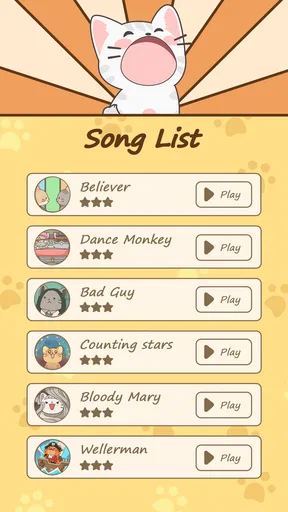
- Song progress and timing feedback help players improve gradually.
- Short levels fit well into quick gaming sessions.
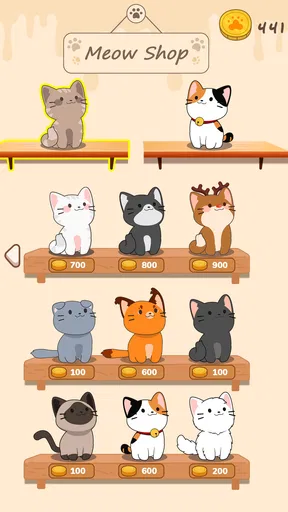
- Unlockable cat content adds a reason to keep playing.
Limitations of Duet Cats: Music & Meow Game
- Some songs and features may require in-app purchases to access.
- Repeated tracks can make the gameplay feel limited over time.
- Precise timing may be difficult on smaller phone screens.
- Frequent ads can interrupt the flow between performances.
- The game may need extra storage for downloaded music and assets.
Other Releases by AMANOTES PTE. LTD.
View All
Tiles Hop Music & Ball Game
Music4.3

Magic Tiles 3™ - Piano Game
Music4.6

Dancing Road Color Balls Match
Arcade4.6

Beat Jumper: EDM up
Music4.4
Similar Picks in This Category
View All
My Talking Angela
Outfit7 Limited4.2

My Talking Tom
Outfit7 Limited4.3

Pou
Zakeh4.2

My Talking Tom 2: Pet Game
Outfit7 Limited4.3

Candy Crush Saga
King4.6

Bridge Race
Supersonic Studios LTD4.1
Frequently Asked Questions
What is Duet Cats: Music & Meow Game?
Duet Cats: Music & Meow Game is a casual rhythm game in which players control adorable cats that sing along to popular-style songs. The main challenge is tapping the correct notes at the right time while enjoying animated feline performers, colorful stages, and playful effects. It is designed for quick sessions and is easy to understand, even for players with little experience in rhythm games.
How do you play Duet Cats: Music & Meow Game?
Gameplay is based on timing and coordination. Notes appear on the screen as the cats perform, and you tap, hold, or interact with the indicated areas to keep the song going. Accurate actions help you achieve better scores and unlock additional content. The controls are generally simple, but faster songs and more complex patterns can become surprisingly challenging as you progress.
Is Duet Cats: Music & Meow Game free to download?
The game can generally be downloaded for free, although it may include optional in-app purchases. These purchases can provide cosmetic items, extra content, or other conveniences, depending on the version available in your region. Players should also expect advertising in some parts of the experience. You can usually enjoy the basic gameplay without paying, but progression may be influenced by ads or optional purchases.
Does the game require an internet connection?
An internet connection may be needed for the initial download, advertisements, account-related features, updates, and access to certain songs or online content. Some previously downloaded gameplay elements may work offline, but the availability of offline features can vary by device and app version. If you plan to play while traveling, it is best to test the game without a connection before relying on it.
Is Duet Cats: Music & Meow Game suitable for children?
The game uses cute animal characters, simple rhythm mechanics, and colorful visuals, making it appealing to children and families. However, parents should review the recommended age rating and check the app’s advertising and in-app purchase settings before allowing unsupervised play. Because songs, promotions, or online services can change, parental controls are advisable, especially on shared devices or accounts with stored payment information.
Play our best games!


